

Article
Is Flimty Safe During Pregnancy and Breastfeeding?
Flimty pregnancy and breastfeeding safety is one of the questions our team gets most often, since anything new you put
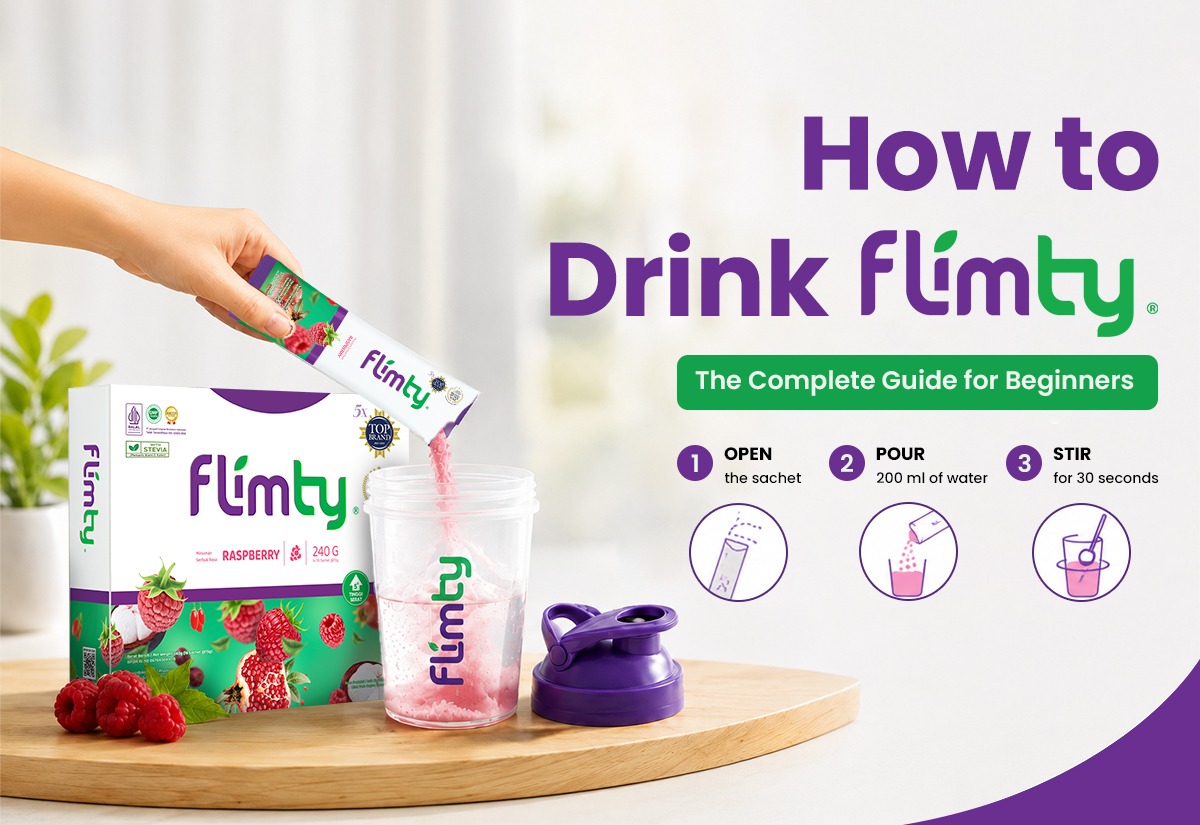
Quick answer: To drink Flimty, empty one sachet into a glass or shaker, add 200 ml of cold water, stir for about 30 seconds, and drink it straight away before it thickens. Most people take one sachet a day, roughly 30 minutes before their main meal, along with plenty of water through the rest of the day.
If you have just opened your first box, this guide walks you through exactly how to drink Flimty — the right amount of water, the best time of day, how to adjust your dose, and the small mistakes that stop beginners from getting results. New to the product entirely? Start with what Flimty is and what is inside it, then come back here.
Flimty is a Halal-certified fibre drink built around psyllium husk — the outer seed coat of Plantago ovata — combined with fruit and vegetable extracts and sweetened with stevia rather than sugar.
Psyllium is a gel-forming soluble fibre. In water it swells into a soft, viscous gel, which is exactly what makes it useful for digestion and for that satisfying full feeling before a meal. It is also why technique matters: mix it too slowly, use too little water, or leave it standing on the counter, and you end up with a thick, clumpy drink that is unpleasant to swallow. Mix it properly and it goes down like a light fruit cordial.
So the two things that decide your experience are simple: enough water, and drink it immediately.
Tear one Flimty sachet along the notch and empty all of the powder into a glass or a shaker bottle. Use one full sachet unless you are easing in gently (see the dosage section below).
Add about 200 ml of cold or room-temperature water — roughly one standard glass. Cold water keeps the flavour crisp and slows down how fast the gel sets, which gives you more time to drink comfortably.
Avoid hot water. Heat makes psyllium thicken much faster and you will be left with a gluey texture.
Stir briskly with a spoon for about 30 seconds, or seal a shaker bottle and shake for 10–15 seconds until no dry powder remains. Then drink it within a minute or two. Psyllium keeps absorbing water the whole time it sits, so a glass left for five minutes will be noticeably thicker than one drunk fresh.
Finish with a second glass of plain water. This is the step almost everyone skips, and it is the one that matters most for comfort.
200 ml is the recommended starting point, but you can adjust to the texture you prefer. Clinical literature on psyllium husk generally suggests dissolving each dose in roughly 150–200 ml of liquid, so anywhere in the range below is sensible.
| Water | Texture | Best for |
|---|---|---|
| 150 ml | Thick, smoothie-like | People who want a stronger full feeling before a meal |
| 200 ml | Balanced — recommended | Most people, most days |
| 250 ml | Light, juice-like | Beginners, or anyone with a sensitive stomach |
One rule does not change: whichever amount you choose, drink extra water across the day. Fibre needs fluid to do its job, and taking it without enough water is the single most common cause of bloating or discomfort.
There is no single “correct” time — the best time is the one you will actually stick to. That said, these are the three patterns that work well:
| Timing | Why choose it |
|---|---|
| 30 minutes before dinner | The most popular option. The fibre gel has time to expand before your evening meal, which helps you feel satisfied sooner. |
| Before breakfast | Good if your evenings are unpredictable, or if you want to start the day with your fibre already handled. |
| 30–60 minutes after a meal | Gentler on the stomach. This is the option to choose if you have acid sensitivity — see our guide on Flimty and sensitive stomachs. |
Whichever you pick, keep it consistent. Your digestive system responds to routine far better than to a sachet taken at random times. If you tend to feel heavy after eating, our post-meal routine guide pairs well with this habit.
One sachet a day is the standard serving. Fibre is not a “more is better” ingredient — increasing too quickly is what causes gas and bloating, not the fibre itself.
| Dose | Who it suits | How to do it |
|---|---|---|
| ½ sachet | Beginners, sensitive digestion, or anyone who rarely eats much fibre | Half a sachet in 200 ml water for 1–2 weeks, then build up to a full one |
| 1 sachet | Standard daily serving | One sachet in 200 ml water, once a day, at a consistent time |
| 2 sachets | Only if you already tolerate one sachet well and want more fibre in your day | Space them apart — one in the morning, one in the evening — never both at once |
Adults in the UAE typically fall well short of the fibre intake health authorities recommend; the NHS, for example, suggests around 30 g of fibre a day. A fibre drink is there to help close that gap — not to replace vegetables, fruit, and whole grains.
Everyone’s digestion is different, so treat this as a general pattern rather than a promise. Results depend on your overall diet, hydration, activity, and how consistent you are.
| Timeframe | What people commonly notice |
|---|---|
| First few days | More regular bowel movements. Some mild gas is normal as your gut adjusts to extra fibre. |
| Week 1–2 | The adjustment settles. Digestion feels more predictable and less heavy after meals. |
| Week 3–4 | The habit is established. Appetite before meals is often easier to manage. |
| Ongoing | Fibre works through consistency, not intensity — the benefit comes from keeping it up. |
Struggling with bloating specifically, especially at a desk job? Our guide on relieving bloating and constipation at the office covers what else helps alongside fibre.
Most people tolerate it fine, and taking it about 30 minutes before a meal is a common routine. If you have a sensitive stomach, gastritis, or acid reflux, take it 30–60 minutes after eating instead, and start with half a sachet.
You can, but leave a gap of at least an hour before lying down, and make sure you drink it with a full glass of water. Lying down soon after any thick fibre drink is more likely to feel uncomfortable.
Water is what we recommend — it gives the cleanest taste and the most predictable texture. Cold juice or milk will work, but they thicken faster and add sugar or calories you may not want. Hot water is best avoided entirely.
One sachet a day is the standard serving. Up to two is possible for people who already tolerate one well, taken several hours apart. If you are unsure — or you take regular medication — check with your doctor or pharmacist first.
Many people notice a difference in regularity within the first few days. Anything related to appetite or general wellbeing depends much more on your overall diet and consistency, and usually takes a few weeks of daily use.
Insufficient fluid is the main reason people feel bloated or blocked up on a fibre supplement. Psyllium needs water to form the soft gel that makes it work; without it, the effect is the opposite of what you want. Always take it with a full glass and keep drinking water through the day.
Psyllium husk is well studied and generally well tolerated as a daily fibre source. As with any supplement, if you are pregnant or breastfeeding, managing a medical condition, or taking prescription medication, speak to your doctor before making it a daily habit.
Now that you know exactly how to drink Flimty, the rest is just keeping the box stocked:
Start with one sachet, 200 ml of water, and a consistent time each day. That is genuinely all there is to it.
Disclaimer: Flimty is a food supplement, not a medicine, and is not intended to diagnose, treat, cure, or prevent any disease. This article is general information and does not replace advice from a qualified healthcare professional. If you are pregnant, breastfeeding, under medical care, or taking prescription medication, consult your doctor or pharmacist before use.
Flimty pregnancy and breastfeeding safety is one of the questions our team gets most often, since anything new you put

Flimty for ulcers is one of the most common questions from people managing gastritis, acid reflux, or a diagnosed ulcer,